
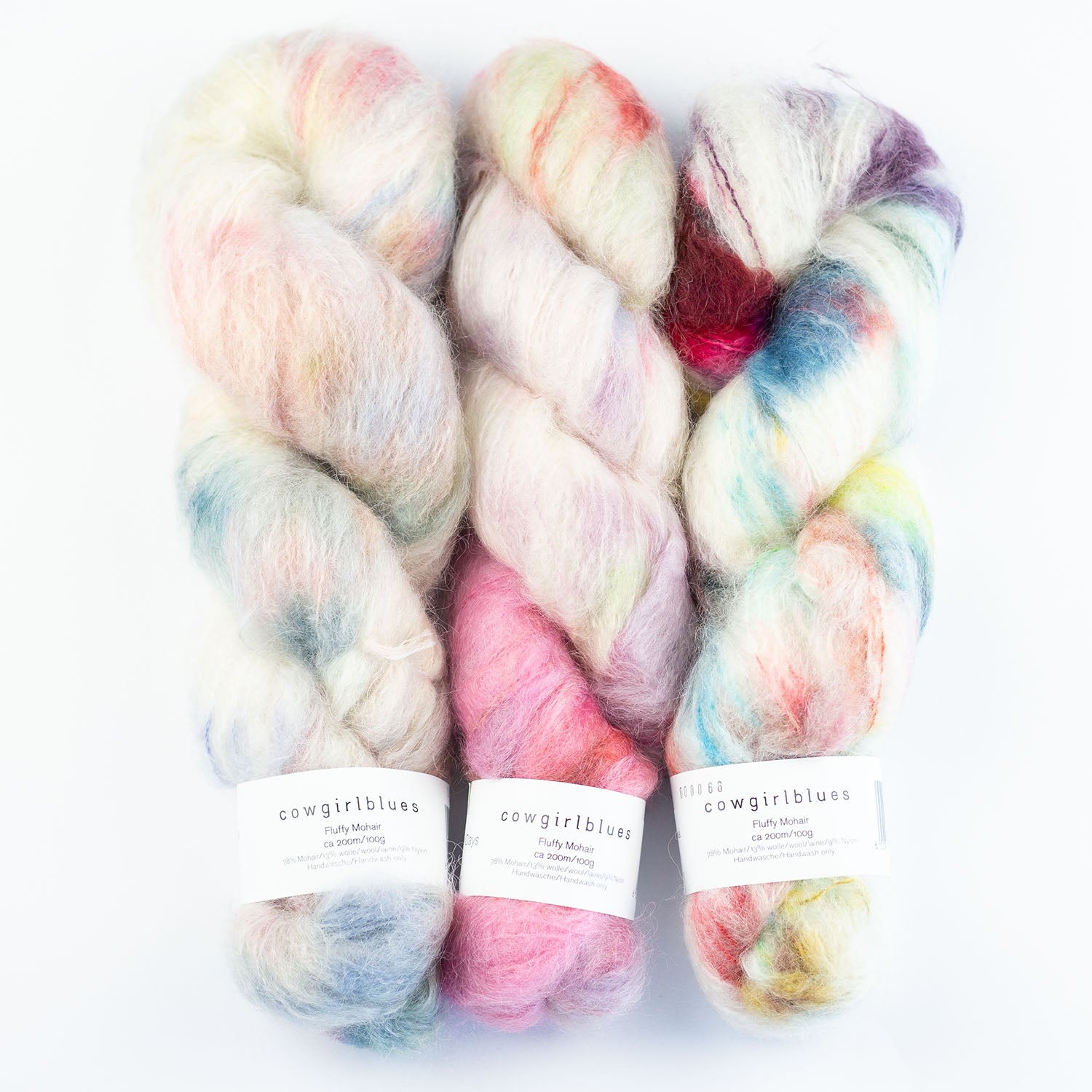

Mohair wool – scratchy or comfortable to wear?
Are you one of those experienced knitters who already have experience with mohair yarn? Whether you've worked with mohair before or not, you might already have garments or warm accessories containing mohair in your wardrobe. Perhaps you find pieces made with mohair yarn scratchy? We'll show you why we love mohair and how you can still wear mohair pieces with ease. Maybe you, too, will consciously choose mohair yarn in the future to create new favorite pieces.
Advantages of the popular natural fiber
Mohair is a natural fiber with numerous advantages. Wool blended with mohair is not only visually appealing but also pleasant to work with. This natural fiber is exceptionally light and soft, easily absorbs moisture, is water-repellent, and has antibacterial properties. Furthermore, the fibers don't wrinkle and are particularly durable. But the best part is that you can use mohair to create garments for both winter and summer. While the fiber provides warmth in winter, you'll benefit from its cooling effect in summer.
Origin of the precious fibers
Mohair is a very fine and high-quality material. It is obtained from the hair of the mohair goat, also known as the Angora goat. However, it should be noted that the Angora goat is not related to the well-known Angora wool, as this, unlike mohair, is not made from goat hair.
The mohair goat is a long-haired breed of wool goat, distinguished by its curly coat. Originally, this breed came from Asia. The term "mohair," however, originates from Arabic and originally referred to a fabric made from hair. Although mohair goats are still bred and kept for wool production in their original homeland, the Ankara province of Turkey, Turkey is not among the largest producers of mohair wool. While these wool goats are now kept worldwide, Australia, Lesotho, Madagascar, Texas (USA), and South Africa are leading producers of mohair. Generally, Angora goats are sheared twice a year. Each goat yields between 3 and 6 kg of wool. Mohair wool remains one of the most valuable textile fibers in the world.
Mohair wool is scratchy – the choice of wool matters.
If you find mohair wool scratchy, this could very well be due to choosing the wrong type of wool, because not all mohair is created equal. Angora goats naturally have a silky, long, and curly coat. However, the wool changes as the goat ages. While the hairs of young animals are very fine, the diameter of the hairs increases with the age of the mohair goat. Mohair is thus classified into fineness grades, which ultimately determine what the fibers are best suited for.
If you'd like to knit or crochet garments, "Kid" mohair is particularly well-suited. The exceptionally fine mohair fibers won't feel scratchy, even when worn directly against the skin. "Young Goat" mohair can also be used for garments without any problems, although it won't feel quite as silky and soft as "Kid" mohair. "Adult" mohair fibers, on the other hand, are not suitable for garments worn directly against the skin. However, they are used for making blankets, pillows, cushion covers, and, last but not least, high-quality rugs.
I chose the right wool, but the mohair wool still itches?
If mohair wool becomes scratchy against the skin over time, after initially feeling comfortable, this could be due to improper care. Generally, mohair offers a pleasant feel against the skin. Hand washing is always recommended. If you want to wash your favorite mohair garments in the washing machine, you should definitely select the wool cycle and not exceed a maximum temperature of 30°C (86°F). You should also avoid spinning, as high speeds can damage the delicate fibers. In any case, you should use a gentle wool detergent, as this will care for the fibers and not damage them. You should absolutely avoid both regular detergents and fabric softeners if you want to prevent your mohair wool from becoming scratchy.
Here's where you can find our laundry detergent:
https://oonique.com/products/waschmittel-cozy-care
What do we love about mohair?
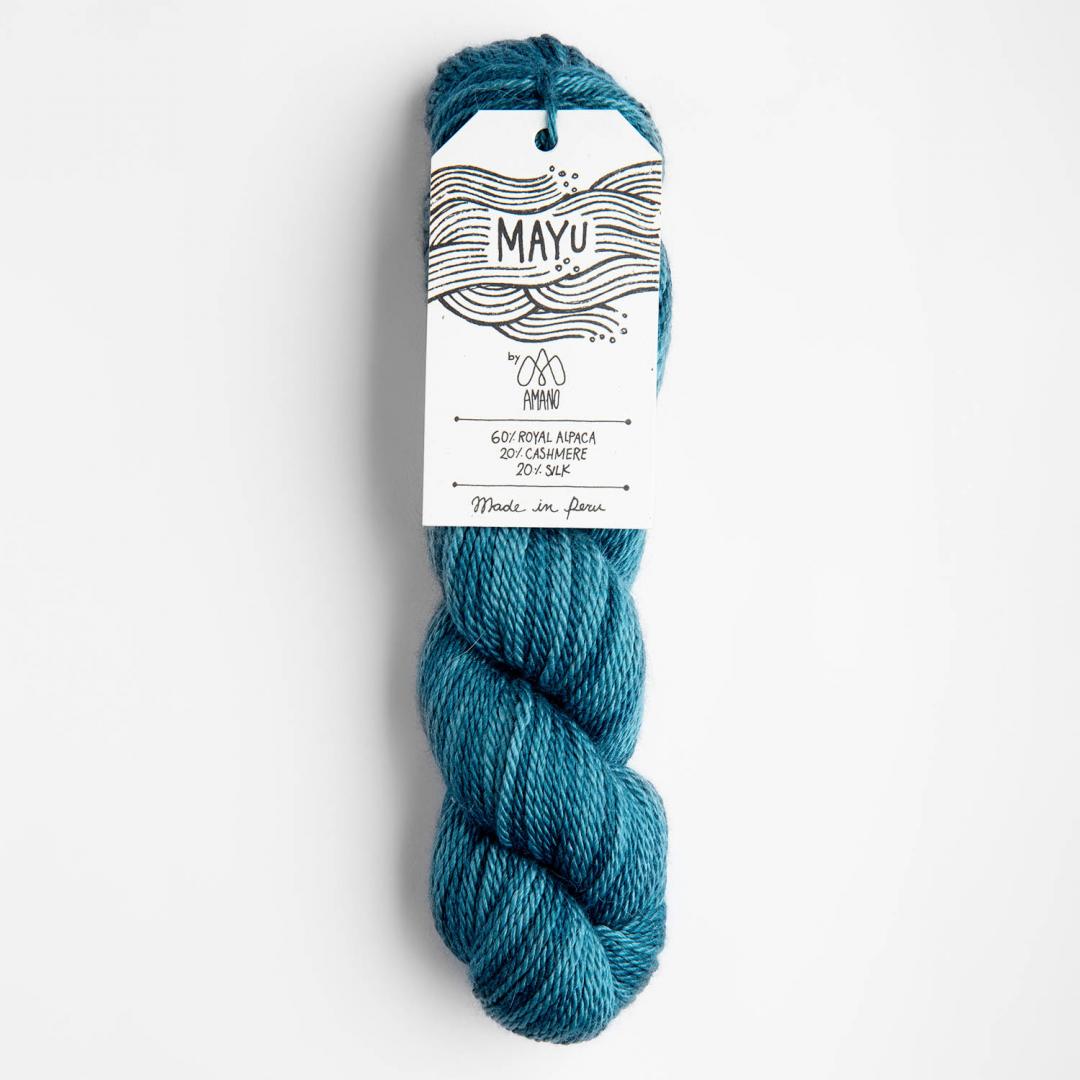
There are many reasons to choose wool with mohair. We are impressed by both the comfort and the durability of the material. A major plus is that even our older mohair projects show hardly any pilling and have remained beautifully fluffy over the years. We particularly enjoy working with yarns made of mohair and silk . However, other blends are also easy to work with, as yarns with a high mohair content require an additional fiber to strengthen the yarn. The yarns are a pleasure to work with. From dreamy shawls and hats to sweaters and cozy jackets, you can create a wide variety of items with mohair. Even the youngest family members love garments made of fluffy, soft mohair. In addition to the mohair yarns suitable for winter, we are also enthusiastic about the mohair yarns for summer, as these varieties are also not itchy.
The perfect yarn for your next knitting project
If you'd like to try your hand at crafting a project or two with mohair yarn, you'll find the perfect yarns in our OONIQUE shop. We carry a selection of yarns made from the finest mohair. When it comes to mohair, you shouldn't compromise and should opt for high-quality yarns made with "Kid" mohair. Of course, you'll also find inspiration for your next project. In addition to ordering your chosen yarns, you can also add matching patterns and needles to your order. We especially recommend our kits.
Of course, we provide detailed information for each individual yarn. Besides the yardage per ball, you'll also find information on the required needle size, gauge, and, naturally, the exact composition of each yarn. If you're not a fan of mohair, you'll also find attractive and high-quality alternatives made from a variety of fibers in our shop.
A great alternative could be, for example, this yarn here:
https://oonique.com/products/setasuri

Leave a comment
This site is protected by hCaptcha and the hCaptcha Privacy Policy and Terms of Service apply.