

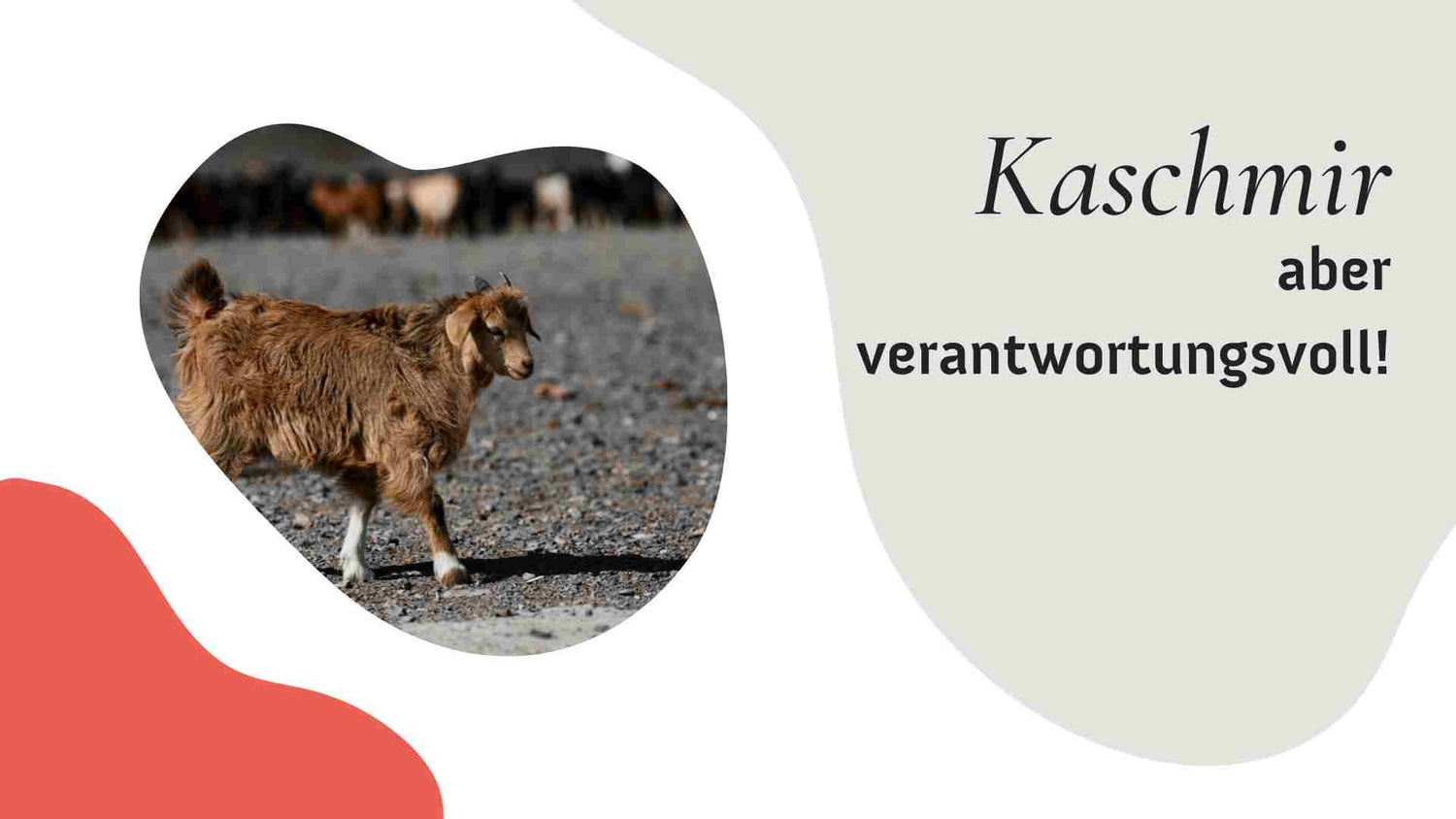
Cruelty-free cashmere for sustainable favorite pieces
Whether you're just starting out with knitting or are already a full-fledged member of the knitting club, anyone who enjoys knitting also loves fine wool. So it's no surprise that yarns with cashmere are extremely popular. But as popular as cashmere is, the fiber is also rare, and correspondingly high prices can be achieved for the raw wool on the global wool market. As a result, animal welfare is often neglected. Instead, everything is done to maximize profits. Animal rights activists have long criticized the fact that cashmere production is often associated with immense suffering for the wool-producing goats.
But this doesn't mean you have to completely forgo cashmere; rather, you should choose cashmere yarns very consciously and opt for responsibly sourced cashmere wool. We at OONIQUE have also given this some thought, because like you, we love wool, and animal welfare is very important to us. For this reason, we've looked into the topic more closely and would like to familiarize you with the controversy surrounding cashmere wool and explain why responsible cashmere wool is so important to us.
Cashmere hair – a history spanning millennia
The processing of cashmere fibers dates back centuries. As early as 1000 BC, the hair of the cashmere goat was used to create fine textiles. To this day, cashmere wool is considered exceptionally high-quality and is a sought-after commodity worldwide. The cashmere goat originated in the Kashmir region, from which this lop-eared breed also derives its name.
As a subspecies of domestic goat, cashmere goats were initially kept in small groups, and the fibers they obtained were used for personal consumption. However, the resulting textiles attracted attention due to their qualities, and trade in the fine hair of the cashmere goat began very early on. Thus, the sustainable cashmere wool was initially obtained responsibly, as the herders carefully tended their small herds to ensure the long-term harvesting and processing of the goat hair.
Wool or hair?
The very term "cashmere wool," commonly used in Germany, could be the subject of extensive discussion. Strictly speaking, cashmere refers to fine hairs that are processed into yarn, for example, together with virgin wool. The term "fine hairs" doesn't just refer to the hair of the cashmere goat, but to the hair of all wool-bearing goats, as well as the hair of camels, alpacas, and yaks.
Wool, strictly speaking, refers to the fleece of sheep, which is significantly coarser in texture than fine wool. The term "cashwool" describes a yarn in which the fibers have been modified and processed into a fine wool. Through a stretching process, "cashwool" is made to closely resemble fine cashmere. Accordingly, "cashwool" can be considered an alternative to cashmere wool, although it is not 100% identical to responsibly sourced cashmere.
The prized hair of the cashmere goat isn't immediately visible, as it's the particularly fine undercoat that's in demand. This undercoat is also often referred to as woolly hair. The annual yield of this fine, luxurious hair is between 150 and 200 grams per goat.
The cashmere goat and its distribution
As a subspecies of the domestic goat, the cashmere goat is now widespread. Originally, this breed was native to the Himalayas, the Pamir Mountains, and surrounding areas. Through selective breeding, approximately 20 different varieties of cashmere goat have been developed. The natural and common coat colors are white, gray, brown, and black in various shades.
Today, these adorable goats are raised worldwide for cashmere wool production. China has established itself as the world's largest cashmere producer, but large farms dedicated solely to cashmere production can also be found in Australia and New Zealand. Cashmere goats are also raised for wool in Europe, with Scotland being the largest cashmere producer in the country.
Alongside large farms, small-scale breeding operations still exist. While the large producers, focused on profit and yield optimization, dominate the entire global market and supply corresponding quantities of cashmere, the smaller farms and breeding operations prioritize animal-friendly and sustainable cashmere production. These small cashmere suppliers keep a close eye on hair quality and the health of their animals. In Germany, cashmere goats with white coats are predominantly raised, as the light-colored, luxurious hair is particularly well-suited for dyeing and therefore commands the highest prices on the world market.
Advantages of cashmere
Perhaps among your favorite items you'll find a hand-knitted cashmere sweater, hat, scarf, or shawl made from this luxurious material. Then you'll know from your own experience why cashmere is so sought after. As one of the highest quality wools, cashmere is not only exceptionally soft but also provides cozy and comfortable warmth on cold winter days. At the same time, the material is incredibly lightweight, resulting in a uniquely comfortable feel.
This sustainable material is also characterized by its durability. However, this requires proper care, as cashmere is unforgiving of improper care. Cashmere is particularly popular because its soft fibers feel gentle against the skin without scratching or pilling. Another advantage is that you can easily wear cashmere in heated rooms and even in summer, as it is naturally temperature- and moisture-regulating. Furthermore, the material is odor- and dirt-repellent and, of course, its fine appearance makes it ideal for creating an elegant look.
The most important advantages of cashmere at a glance:
• soft and skin-friendly
• Odor and dirt repellent
• antibacterial
• scratch-free
• temperature and humidity regulating
PETA is suing
As fantastic as we find this natural material, we don't want to hide from you the fact that there are also downsides to cashmere production. We want responsibly sourced and sustainable cashmere, produced without animal suffering. A look at the websites of animal rights and animal welfare organizations makes it clear that even today, cashmere is still obtained in appalling ways. Especially in countries where cashmere is a major economic factor, the animals are kept in unmanageable numbers. Images from these factory farms are truly shocking and clearly show that the animals are treated as mere commodities.
At OONIQUE, we want wool lovers worldwide to consciously choose sustainable wool and pay attention to the origin of their yarns. That's why it's so important to us to offer you high-quality and responsibly sourced cashmere wool in our shop.
The best raw materials in the world come from the highlands of Inner Mongolia, an impermeable region of Central Asia whose temperature is subject to strong temperature fluctuations with the changing seasons and between day and night. To survive these conditions, Hircus goats develop a very dense coat consisting of a rough outer coat and a fine and soft undercoat, which is then combed at the beginning of the summer season and used in the textile industry. Cardiff sources the best raw materials for its fine yarns from this impressive region of the world through a responsible selection of suppliers.
"Responsible" cashmere wool for carefree knitting pleasure
Anyone who loves high-quality wool is naturally interested in cashmere, one of the most luxurious and premium materials in the wool world. Since we love knitting and high-quality wool, we naturally enjoy working with cashmere. However, we place great importance on sustainable cashmere, and we want to encourage you to do the same. After all, you want to experience pure joy while knitting and later when wearing your lovingly crafted favorites. We believe this is only possible if wool production is carried out responsibly from the very beginning.
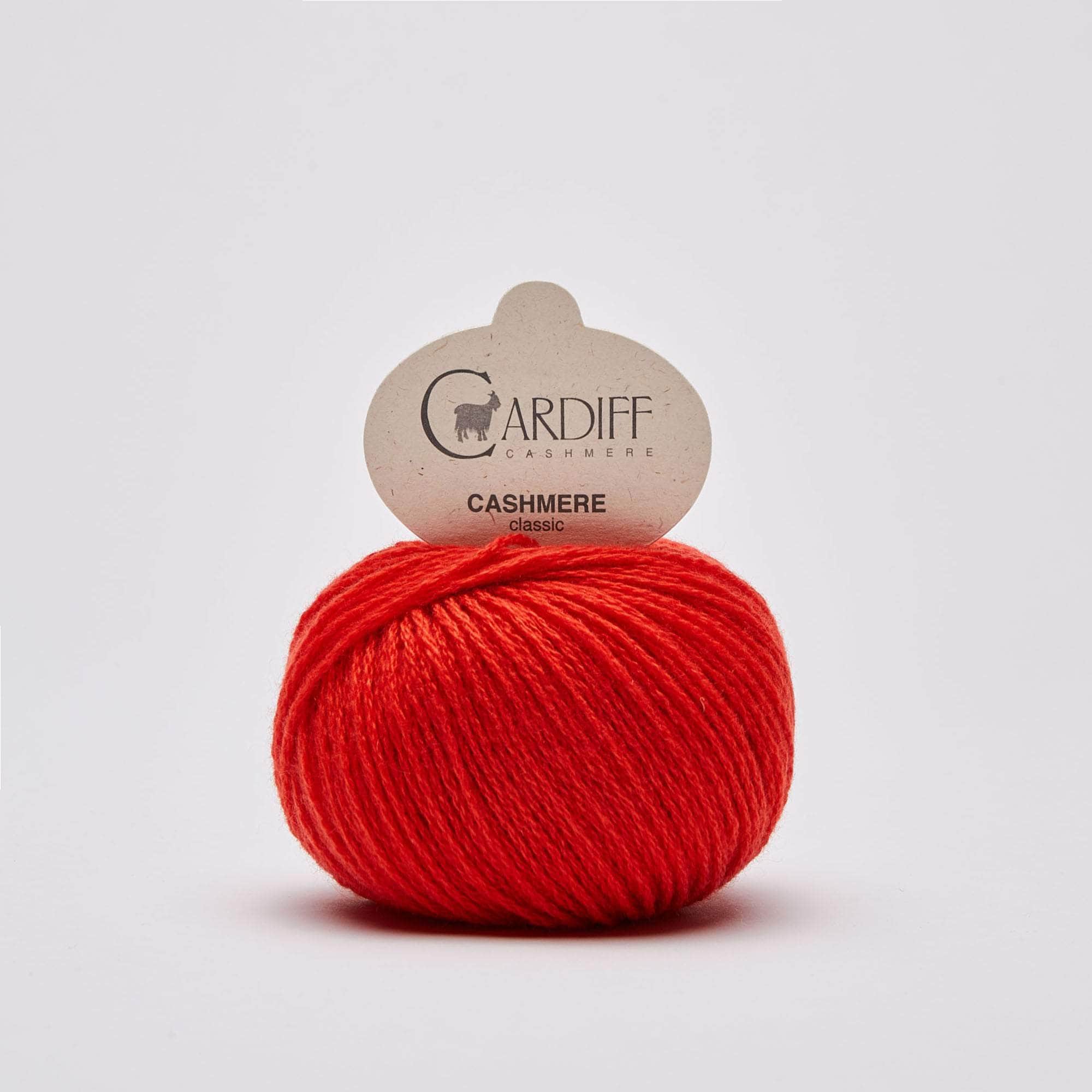
Cashmere wool and animal suffering don't have to go hand in hand. That's why we only offer sustainable cashmere wool in our shop. All the products you find at OONIQUE come from manufacturers who prioritize responsible cashmere sourcing and carefully select their suppliers. For example, we offer select cashmere wool from LANA GROSSA and CARDIFF. This wool is not only pleasant to work with, but it also allows you to enjoy the benefits of cashmere with a clear conscience. LANA GROSSA works with suppliers of high-quality fibers who are committed to meticulous production, limiting the yield per animal to a maximum of 100 grams of fine fiber. Sustainable cashmere wool uses cashmere hairs that are hand-selected or combed out in the spring during the shedding season. This way, the fine undercoat is used, which the animals naturally shed as they lose their winter coats.
We would especially like to recommend our kits, because the kits contain exactly the right amount of sustainable cashmere wool for the enclosed instructions, so you can start your project as soon as the kit arrives and complete your project without running out of wool.
Enjoy sustainable cashmere wool for a long time with proper care.
We generally recommend washing your fine cashmere pieces only when absolutely necessary. Usually, simply airing them out after wearing is sufficient. If a particular item does require washing, it's important to use a special wool detergent or shampoo. Please do not use regular laundry detergent, as this can damage the delicate cashmere fibers.
Ideally, you should hand wash your cashmere garment gently in lukewarm water. Alternatively, you can use your washing machine. Be sure to select the gentle wool cycle and a maximum temperature of 30°C (86°F). Cashmere not only shrinks at higher temperatures but also felts, a process that cannot be reversed. In any case, ensure your garment is thoroughly rinsed with clean water afterward to remove all detergent residue from the fibers. To ensure your responsibly sourced cashmere pieces last a long time, never wring them out. Instead, gently squeeze out excess water. Take a clean bath towel, place the wet garment on it, and carefully roll the towel and garment together. The towel will absorb some of the excess water. You can repeat this process several times before laying the washed garment flat to dry.
Cashmere is particularly delicate when it comes to drying. If you absolutely must use a tumble dryer, you should definitely select the cool air setting. If you opt for the classic method of drying on a drying rack, place a towel on the rack and dry your favorite garment lying flat on the towel. Ideally, you should turn the garment several times during the drying process, as this keeps the fibers loose.
By the way, you should never hang cashmere sweaters and jackets on a hanger, as they can easily lose their shape. It's better to loosely fold your favorite pieces made of high-quality, responsibly sourced cashmere and store them flat until you wear them again.


Leave a comment
This site is protected by hCaptcha and the hCaptcha Privacy Policy and Terms of Service apply.